The Amsterdam Apple Store Hostage Crisis: A Criminological Analysis
An unprecedented hostage situation that unfolded at Amsterdam's Leidseplein
Introduction
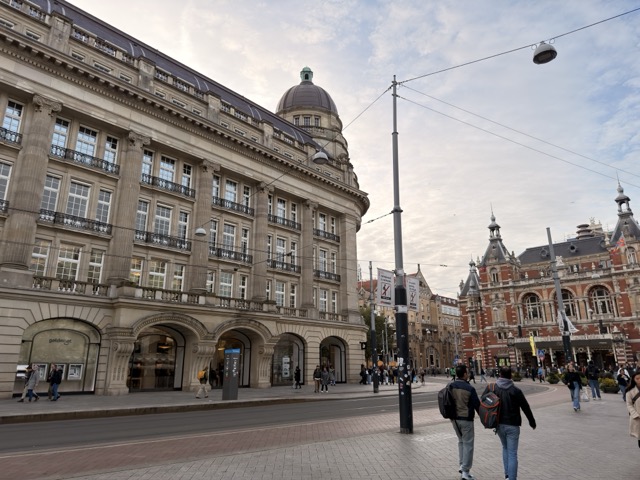
On a Tuesday evening in February 2022, what began as a typical shopping day at Amsterdam's Apple flagship store on Leidseplein transformed into a terrifying five-hour ordeal that would shock the Netherlands. At approximately 5:38 p.m., 27-year-old Abdel Rahman Akkad walked into the busy store armed with both a handgun and an automatic rifle, taking a 44-year-old Bulgarian customer hostage while demanding €200 million in cryptocurrency. For a country where violent crime remains relatively rare, this incident represented something nearly unthinkable, a hostage crisis unfolding in real-time in one of Amsterdam's busiest public squares.
What makes this case particularly significant from a criminological perspective is not just the dramatic nature of the event itself, but the complex web of circumstances that led to it. Akkad's actions emerged from a combination of financial desperation, a troubled criminal history, and possible mental health struggles. The controversial ending, when police struck Akkad with an armored vehicle as he chased after his escaping hostage, sparked intense national debate about how far law enforcement should go to protect innocent lives. This analysis explores the various dimensions of this crisis: what happened, why it happened, who was involved, and what it reveals about crime, policing, and public safety in contemporary Dutch society.
 - Made by Giovanni normaal.jpeg)
Nature and Context of the Criminological Issue
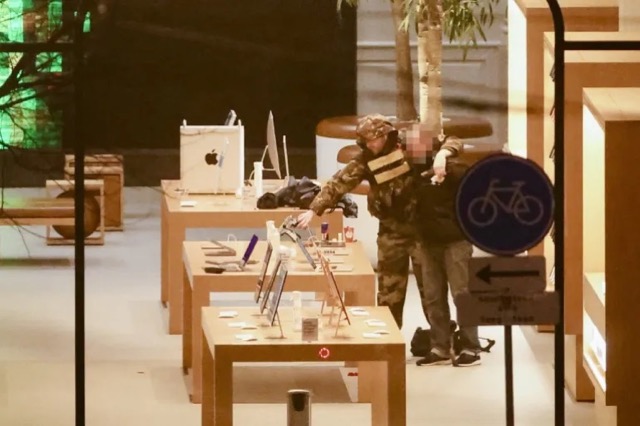
The Apple Store hostage situation represents a rare convergence of multiple types of serious crime, armed robbery, kidnapping, and terrorist-style threats, all unfolding simultaneously in a highly public setting. When police received the first emergency calls that evening, they initially had little information beyond the basics: someone with a weapon, shots fired, people in danger. What officers encountered upon arrival was far more complex and dangerous than a typical robbery. Akkad, dressed in camouflage and heavily armed, had already seized a hostage and was threatening to detonate what appeared to be explosives strapped to his body.
The symbolism of the location cannot be overlooked. Apple stores represent more than just retail spaces, they are cultural landmarks associated with wealth, technology, and global capitalism. By targeting such a recognizable brand in the heart of Amsterdam's entertainment district, Akkad ensured maximum public attention and psychological impact. When he fired at least four shots at responding officers, forcing them to retreat and establish a defensive perimeter, it became clear this would not be resolved quickly or easily.
For the Netherlands, a country that prides itself on relatively peaceful streets and effective social systems, this type of violent hostage-taking felt almost foreign. The incident forced difficult questions into public consciousness: How vulnerable are our public spaces? Can we trust police to make life-and-death decisions in split seconds? Police Chief Frank Paauw would later defend his officers' actions, stating that "the driver of the DSI car reacted adequately" when the vehicle struck Akkad. However, not everyone agreed that ramming a suspect with an armored vehicle represented appropriate force, regardless of the circumstances. This controversy continues to resonate within Dutch society today.
Problem Context and How It Arose
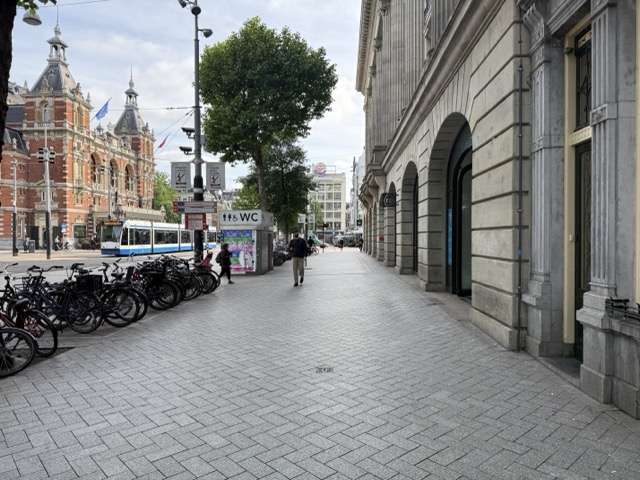
To understand how the crisis unfolded, we need to picture the scene. Leidseplein on a Tuesday evening is typically bustling with activity, tourists, locals, street performers, people grabbing dinner or heading to shows. The Apple Store, with its characteristic glass facade and open design, would have been filled with customers examining the latest iPhones and MacBooks, while employees helped with purchases and technical support. Around 70 people were inside when Akkad arrived in a white Albert Heijn delivery van, parked it with hazard lights flashing, and walked through the doors carrying weapons.
The chaos that ensued is difficult to imagine. As Akkad seized his hostage, others scrambled to hide or escape. Four individuals managed to squeeze into a broom closet on the ground floor, where they would remain for the entire five-hour ordeal. Among them was a mother with her daughter; at one point, the mother became so unwell that police provided them with a smartwatch to remotely monitor her heart rate. These hidden individuals showed remarkable composure under unimaginable pressure, even managing to keep the store's music playing throughout the night, a detail that may have saved their lives by masking any sounds they made.
Meanwhile, Akkad began communicating his demands. He wanted €200 million in cryptocurrency and guaranteed safe passage. His choice of cryptocurrency reveals some strategic thinking, digital currency is harder to trace than cash. But the sheer amount demanded suggests someone detached from reality, perhaps driven by desperation rather than rational calculation. At 7:01 p.m., he sent photographs to the local television station AT5, writing: "Here speaks the hostage taker, if the amount is not going to be transferred. This man's life is on your conscience along with the system". These weren't the words of a professional criminal executing a carefully planned heist; they were the words of someone angry, bitter, and seemingly willing to blame society for his predicament.
During negotiations, Akkad revealed more about his mental state. He told police negotiators: "You have done me wrong and this is my revenge. I have given you enough chances to talk about feelings. I have given up". These statements suggest someone who felt victimized by institutions, someone who had reached a breaking point. Throughout the standoff, he insisted on speaking only with male negotiators, though his reasoning for this preference remained unclear.
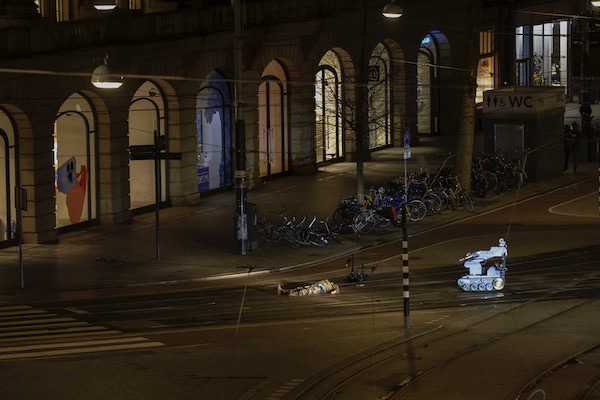
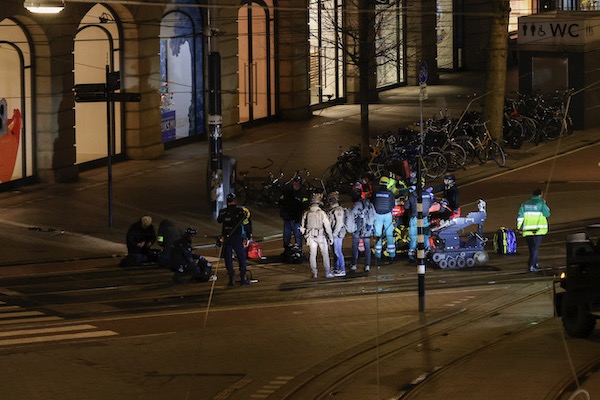
The resolution came suddenly at 10:30 p.m. When Akkad requested water, police sent in a robot to deliver it. As his hostage moved toward the store entrance to retrieve the bottle, he made a split-second decision that would prove decisive, he ran. Akkad immediately gave chase, bursting through the doors into the square. At that moment, a police special intervention vehicle accelerated forward and struck Akkad, sending him to the ground unconscious. He never woke up, dying the following evening from his injuries.
Causes of the Problem
When we try to understand why Akkad did what he did, we find ourselves looking at a life that had been gradually unraveling. His criminal record provides some clues, previous convictions for weapons possession and a stalking charge involving his ex-girlfriend just months before the incident. Police records noted that he "regularly displayed confused behavior and was known to mental health services," suggesting he had been struggling psychologically for some time. However, without a comprehensive psychological evaluation, we can only speculate about whether mental illness played a driving role in his actions.
Financial troubles appear to have been a major factor. In 2018, Akkad had started an installation company with what we might imagine were hopes of building a successful business and stable future. The venture failed, never even filing annual financial statements. By 2022, he was working as a delivery driver for Albert Heijn supermarket, honest work, but likely a far cry from his entrepreneurial ambitions. During negotiations with police, he spoke bitterly about money problems and what he perceived as systemic injustice perpetrated by authorities. The €200 million demand, wildly unrealistic as it was, seems to reflect either delusional thinking or a desperate fantasy about solving all his problems with one dramatic act.
What's particularly striking is the evidence of premeditation. According to investigator Johan from the Counter-Terrorism, Extremism and Radicalization unit, "He takes a week off work and locks himself in his room. He has searched for things". Akkad wasn't acting on impulse, he planned this. He even wore a body camera to document the event, suggesting some desire to have his actions recorded and perhaps understood by others. Yet despite all this preparation, he chose not to arm the explosives he wore, a decision that hints at internal conflict or incomplete planning.
Many questions remain unanswered. Why the Apple Store specifically? Was there symbolic meaning to the target, or was it simply a prominent location? Did anyone help him acquire the weapons and explosives? Investigators searched two residences and analyzed seized electronic devices but never definitively answered these questions. What we're left with is a picture of a troubled man, financially desperate, possibly mentally unwell, who spent a week preparing to execute a plan that seemed doomed from the start.
Consequences of the Problem
The immediate physical outcome was, remarkably, that everyone except Akkad survived. But calling this a "good outcome" would ignore the deep psychological scars left on those who lived through it. According to police spokesperson Rob van der Veen, speaking one year after the incident, "Someone who was hiding there during the hostage situation still suffers from it today". The primary hostage spent five hours with a gun pointed at him, never knowing if each moment might be his last. The four people cramped in that broom closet, trying to stay silent while fearing discovery, undoubtedly carry trauma from the experience. These are the kinds of psychological wounds that don't heal quickly or easily.
For Dutch law enforcement, the incident prompted both pride and soul-searching. Minister of Justice and Security Dilan Yeşilgöz praised the "controlled and decisive actions" of police, while National Police Chief Henk van Essen commended the "professional and decisive action". Security expert Rico Briedal noted that police handled the situation "very well" and "used the least heavy weapon to neutralize the hostage taker, a vehicle instead of a weapon". From this perspective, the officers made difficult decisions under extreme pressure and saved lives.
However, public reaction was mixed. Some residents near the scene described watching in shock as the police vehicle struck Akkad. Nineteen-year-old Niels Vermaat, who witnessed the intervention from his apartment, recalled: "We watched all evening. It was actually very quiet the whole evening, but when he came running outside it was intense. 'Holy shit,' I thought. After he was hit by the car he was lying unconscious. Then the police shouted that he should put his hands up, but that wasn't possible, he was unconscious". This disconnect between the official narrative of controlled professionalism and the visceral reality of what residents witnessed speaks to the complex nature of police use of force.
The legal aftermath provided some closure. In June 2022, the Netherlands Public Prosecution Service concluded its investigation and determined that the Royal Marechaussee officer who drove the vehicle would not face prosecution. The intervention was deemed "a very adequate and effective intervention" that ended "a very life-threatening situation". Yet the decision not to prosecute doesn't erase the ethical questions: Could Akkad have been apprehended without killing him? Were there alternative approaches that could have worked?
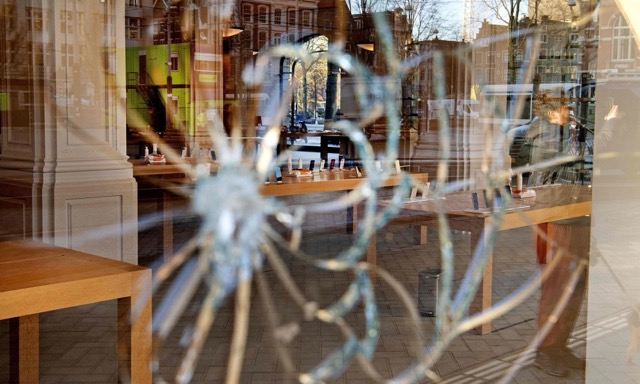
The physical reminders of violence lingered. The day after the crisis, bullet holes were clearly visible in the store's large glass windows, a stark reminder of how close innocent people had come to serious harm. Apple temporarily closed not just the Amsterdam location but also stores in Haarlem and The Hague, presumably to provide support to traumatized employees and reassess security protocols.
Perhaps the most touching consequence came about a month later when Amsterdam Mayor Femke Halsema awarded hero medals to five people: the Bulgarian hostage and the four individuals who hid in the closet. In her recognition statement, she acknowledged that "The violent hostage situation last month at Leidseplein was profound and made a deep impression on those directly involved". She specifically praised the primary hostage's decision to escape as "incredibly brave, even though he does not see himself as a hero," and commended those who hid for managing "despite their precarious situation" to pass "important information about the hostage situation to the police."
Involved Actors and Their Roles
Understanding who was involved and what they did helps us appreciate the human complexity of this crisis. At the center was Abdel Rahman Akkad himself, not a hardened professional criminal, but a 27-year-old delivery driver whose life had taken a series of wrong turns. His father was Syrian, and he had been living in Amsterdam, known to both police and mental health services, seemingly struggling to find his place in society. Whatever his original intentions, his actions that evening set in motion events that would end his life and traumatize dozens of others.
The primary hostage, whose identity was protected, showed extraordinary courage when the moment came. Police Chief Paauw would later say: "The hostage played a heroic role by forcing a breakthrough in a fraction of a second. Otherwise it could have been a very bad, long night". Think about the calculation this man had to make in an instant, stay and hope for the best, or run and risk being shot in the back. His decision to run not only saved himself but created the opportunity for police to act. Through his lawyer, he later requested that media footage of the hostage situation be removed from circulation, wanting simply to move on from the traumatic experience.
The four individuals hiding in the broom closet played an equally important but less visible role. For five hours, they stayed silent, controlled their breathing, managed their fear. The mother who became ill while trapped with her daughter must have experienced unimaginable anxiety, yet they endured. More remarkably, they managed to communicate with police, providing tactical information while maintaining the store's music system to mask their presence. Their contributions to the successful resolution earned them formal recognition as heroes.
The Amsterdam Police, particularly the specialized counter-terrorism unit known as the Dienst Speciale Interventies (DSI), carried the primary operational burden. These are officers trained for exactly these scenarios, hostage situations, armed suspects, potential explosives. The DSI represents a unique Dutch approach, combining police officers with Royal Marechaussee (military police) specialists. The officer who made the decision to accelerate that armored vehicle toward Akkad acted in a fraction of a second, a choice that would be scrutinized for months but ultimately deemed justifiable.
Behind the scenes, police negotiators spent hours on the phone with Akkad, trying to understand him, calm him, find a peaceful resolution. Akkad's insistence on speaking only with male negotiators added an unusual constraint to their work. Bomb disposal experts assessed the threat of explosives. Robotic units delivered the water that would create the final opportunity for escape. Each of these specialized roles contributed to the operation.
The media, particularly Amsterdam's local television station AT5, faced difficult ethical choices. When Akkad sent them photographs and messages from inside the store, they immediately contacted police rather than publishing for ratings. AT5's news director later explained their decision to withhold the material until after the crisis ended, prioritizing public safety over breaking news. This responsible approach stands in contrast to how media sometimes handles ongoing crisis situations.
Even Akkad's employer, Albert Heijn supermarket, played an unexpected role. When the company noticed one of their delivery vans on news footage from the scene, they immediately contacted police, providing crucial information that helped investigators quickly identify the hostage-taker and access his background. This rapid identification allowed negotiators to tailor their approach based on knowledge of Akkad's history and circumstances.
Finally, there were the approximately 70 other people in and around the store, Apple employees, customers, residents of nearby buildings, all of whom experienced this crisis in their own ways. Some evacuated safely early on. Others sheltered in place for hours, waiting for the all-clear. Their stories received less media attention but their fear and relief were no less real.
Conclusion
The Amsterdam Apple Store hostage crisis serves as a sobering case study in how personal desperation, systemic failures, and split-second decisions can converge into life-and-death situations that challenge our assumptions about crime, policing, and justice. Abdel Rahman Akkad was not a terrorist mastermind or career criminal, he was a troubled young man whose financial failures, criminal history, and possible mental health struggles culminated in a desperate act that cost him his life. The fact that no hostages died represents a remarkable outcome, but we should not overlook the lasting psychological trauma experienced by survivors or the difficult ethical questions raised by the police response.
The decision to strike Akkad with an armored vehicle will likely remain controversial. The official investigation concluded it was justified, and many security experts agreed that using a vehicle rather than firearms represented a measured response given the circumstances. Yet watching another human being get hit by a car, even a dangerous hostage-taker, disturbs something in our collective conscience. These are the impossible choices that law enforcement faces, act decisively and risk going too far, or hesitate and risk innocent lives.
What this case ultimately reveals is that crime and its resolution involve real people making difficult choices under extreme pressure. The hostage who chose to run. The people who stayed hidden and silent. The officer who accelerated toward a fleeing suspect. The negotiators who spent hours trying to talk someone down from the edge. Each of them did what seemed necessary in the moment, and each will likely replay those moments in their minds for years to come. As Dutch society continues to process this event and consider what it means for future crisis response, we should remember that behind every statistic, every policy debate, and every news headline are human beings trying their best to navigate impossible situations.
References
AT5. (2022, February 23). Dader gijzeling stuurde foto's vanuit Apple Store naar AT5 [Perpetrator of hostage situation sent photos from Apple Store to AT5]. https://www.at5.nl/nieuws/213770/dader-gijzeling-stuurde-fotos-vanuit-apple-store-naar-at5
AT5. (2024, March 6). Dit weet je nog niet over de gijzeling in de Apple Store [This is what you don't know yet about the hostage situation in the Apple Store]. https://www.at5.nl/nieuws/225568/dit-weet-je-nog-niet-over-de-gijzeling-in-de-apple-store
Het Parool. (2022, February 23). OM bevestigt overlijden gijzelnemer Apple Store in Amsterdam [Public Prosecution Service confirms death of Apple Store hostage taker in Amsterdam]. As cited in Reformatorisch Dagblad. https://www.rd.nl/artikel/964323-om-bevestigt-overlijden-gijzelnemer-apple-store-in-amsterdam
NOS. (2022a, February 22). Gijzeling op Leidseplein Amsterdam beëindigd, dader overmeesterd [Hostage situation at Leidseplein Amsterdam ended, perpetrator overpowered]. https://nos.nl/l/2418457
NOS. (2022b, February 23). Dit is er gebeurd tijdens de gijzeling in Amsterdam [This is what happened during the hostage situation in Amsterdam]. https://nos.nl/artikel/2418506-dit-is-er-gebeurd-tijdens-de-gijzeling-in-amsterdam
NOS. (2022c, February 23). Inslag kogels in Apple Store Amsterdam, winkel na gijzeling gesloten [Bullet impacts in Apple Store Amsterdam, store closed after hostage situation]. https://nos.nl/artikel/2418527-inslag-kogels-in-apple-store-amsterdam-winkel-na-gijzeling-gesloten
NOS. (2022d, June 10). Agent die gijzelnemer Apple Store Leidseplein aanreed niet vervolgd [Officer who ran over Apple Store Leidseplein hostage taker not prosecuted]. https://nos.nl/artikel/2432142-agent-die-gijzelnemer-apple-store-leidseplein-aanreed-niet-vervolgd
NOS. (2022e, April 1). Heldenspeld voor gijzelaar Apple Store Amsterdam en vier anderen [Hero medal for Apple Store Amsterdam hostage and four others]. https://nos.nl/artikel/2423431-heldenspeld-voor-gijzelaar-apple-store-amsterdam-en-vier-anderen
NPO Radio 1. (2023, February 22). Jaar na gijzeling in Apple Store: 'Slachtoffer heeft er nog altijd last van' [Year after hostage situation in Apple Store: 'Victim still suffers from it']. https://www.nporadio1.nl/nieuws/binnenland/513a8ee2-1883-4de1-9128-ff9f8cff7e1a/jaar-na-gijzeling-in-apple-store-slachtoffer-heeft-er-nog-altijd-last-van
VRT. (2022, February 23). Gijzelnemer in Apple Store Amsterdam droeg explosieven, maar "stonden nog niet op scherp" [Hostage taker in Apple Store Amsterdam wore explosives, but "were not yet armed"]. https://www.vrt.be/vrtnws/nl/2022/02/23/details-gijzeling-amsterdam/